Education is not just about reading textbooks, memorising answers and preparing for examinations. It is also about understanding how the world works, solving everyday problems and developing skills that students can use throughout their lives.
Imagine a student learning about plants by growing a small garden, understanding mathematics by planning a school event or exploring science by building a simple working model. These experiences help turn classroom concepts into something students can see, practise and understand.
This is the idea behind experiential learning in schools.
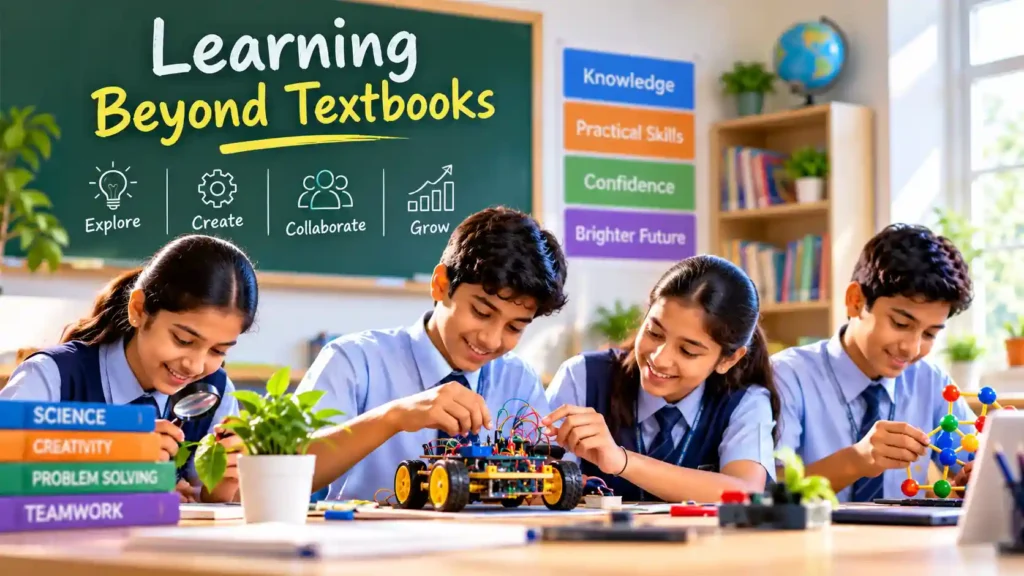
As education evolves, practical activities, projects and real-world experiences are becoming increasingly important. The Central Board of Secondary Education (CBSE) has continued to promote skill education, including the introduction of Kaushal Bodh as a mandatory Skill Education subject for Classes VI–VIII from the 2026–27 academic session.
For parents and students, this development raises an important question: why should education focus on practical skills alongside academic knowledge?
Let’s explore what experiential learning means, how CBSE skill education works and how these approaches can help students become more confident, capable and independent learners.
What Is Experiential Learning in Schools?
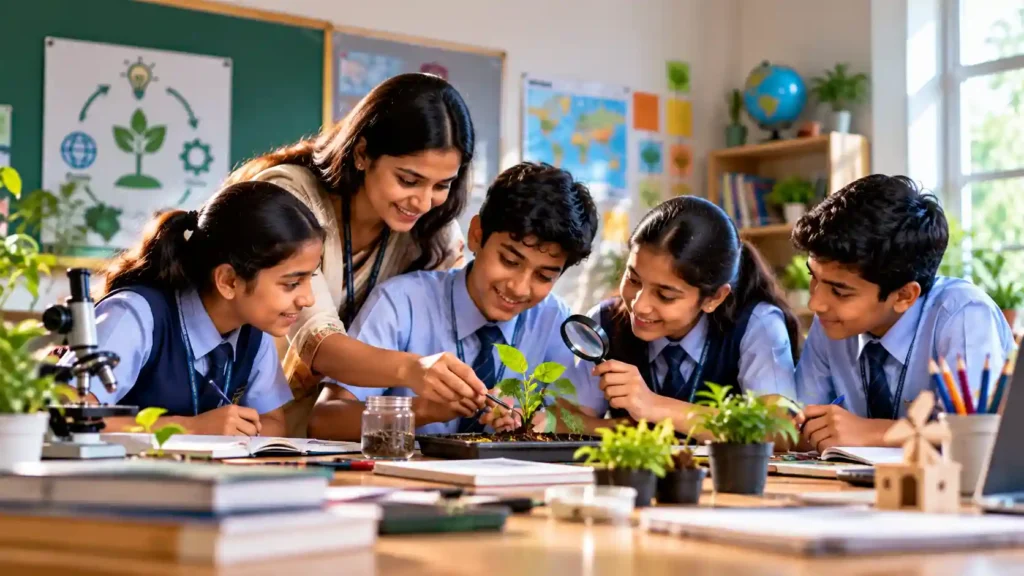
Experiential learning is an approach in which students learn through experience, practical activities, observation, experimentation and reflection.
Instead of only listening to explanations, students actively participate in the learning process.
For example, a student studying environmental science might learn about waste management from a textbook. Through an activity, that student could also identify different types of waste, create a segregation system and discuss ways to reduce waste at home or school.
Both approaches provide knowledge, but the practical experience gives students an opportunity to apply what they have learned.
Experiential learning in schools connects classroom knowledge with real-life situations. It encourages students to ask questions, explore possibilities, learn from mistakes and understand why a concept matters.
Activities may include:
- Science experiments and demonstrations
- Gardening and environmental projects
- Art, craft and design activities
- Group discussions and collaborative projects
- Surveys and community-based assignments
- Simple models, prototypes and demonstrations
- Problem-solving challenges
- Presentations and reflective exercises
The purpose is not to replace textbooks or classroom teaching. It is to make learning more meaningful by combining knowledge with application.
What Is CBSE Skill Education?
CBSE skill education aims to help students develop practical abilities and understand how knowledge can be applied in different situations.
The board offers skill subjects and vocational learning resources across different school stages. For the 2026–27 academic session, its official Skill Education resources list Kaushal Bodh as a mandatory subject for Classes VI–VIII.
The programme introduces students to practical, project-based activities that connect learning with different forms of work and everyday life.
According to the official CBSE curriculum framework, the three broad areas of work include:
- Work with Life Forms: Activities involving plants, animals and the natural environment.
- Work with Machines and Materials: Activities involving tools, materials, technology and making things.
- Work in Human Services: Activities that involve understanding people’s needs and contributing to their well-being.
The framework encourages students to develop foundational vocational abilities, communication, creativity, critical thinking, collaboration and an appreciation for the dignity of work.
You can explore the official CBSE Skill Education curriculum for details about subjects and learning resources.
It is important to understand that skill education is not limited to training students for one particular job. At the school level, it also helps them explore their interests, understand practical processes and develop useful life skills.
What Is the CBSE Skill Education Curriculum 2026–27?
The 2026–27 academic session is particularly relevant to school skill education because CBSE’s official resources identify Kaushal Bodh as mandatory for Classes VI–VIII.
The curriculum is designed around meaningful projects rather than relying entirely on theoretical explanations.
Students are expected to engage with different forms of work and develop an understanding of how practical activities connect with knowledge, responsibilities and everyday life.
For example, projects may involve growing plants, working with materials, exploring technology or understanding the needs of people in a community. The specific activities depend on the prescribed resources, school implementation and the local context.
The curriculum framework describes three projects across each grade, with one project representing each of the three broad forms of work.
This approach gives students opportunities to explore different experiences instead of focusing on just one type of activity.
For parents, the main takeaway is simple: skill education encourages children to understand, practise and apply what they learn.
For accurate details about the prescribed books and resources, visit the official CBSE Skill Education Books and Support Material page.
Why Experiential Learning for Students Matters
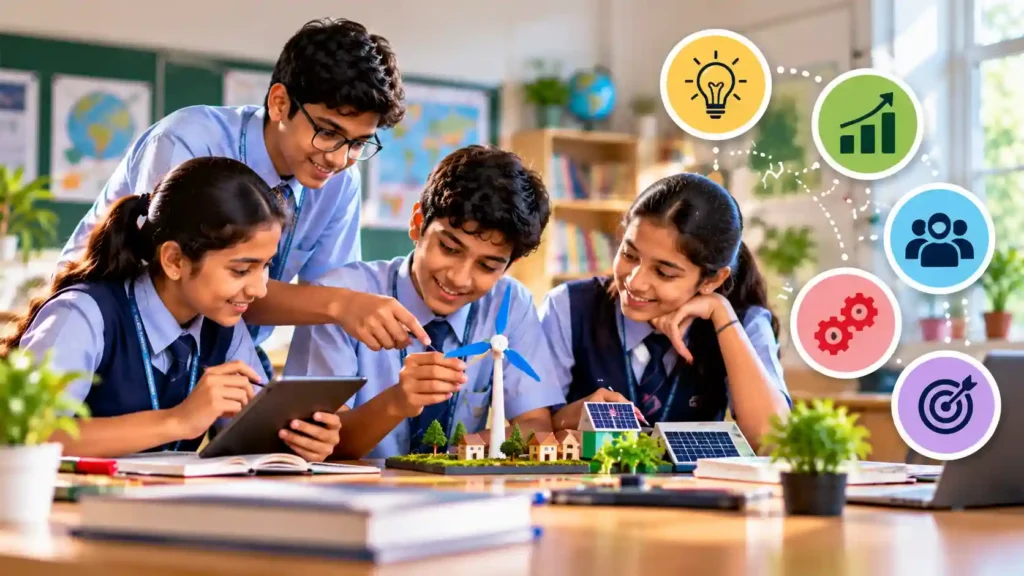
Students learn in different ways. Some understand a concept quickly through an explanation, while others benefit from demonstrations, practice or visual examples.
Practical activities can provide additional ways to understand a topic and make connections between ideas.
Here are some important benefits of experiential learning for students.
1. It Connects Theory With Practice
One of the biggest advantages of experiential learning is that students get opportunities to apply theoretical knowledge.
For example, learning about measurement in mathematics becomes more practical when students measure objects, compare lengths or calculate the area of a classroom.
Similarly, students studying plants can observe growth, compare leaves and record changes over time.
These experiences help students understand how classroom concepts are used outside a textbook.
2. It Develops Critical Thinking
Practical learning often involves questions that do not have an immediate or obvious answer.
Students may need to observe a problem, consider different options, test an idea and decide what to do next.
For instance, if a student is asked to design a simple water-saving system for a school garden, the student must consider the available materials, water requirements and possible solutions.
This process encourages reasoning rather than simply memorising information.
3. It Encourages Problem-Solving
Real-world problems rarely come with step-by-step instructions.
During a project, students may discover that their first idea does not work as expected. They then need to identify the problem and try a different approach.
This helps them learn that mistakes can provide useful information.
With appropriate guidance, students can develop patience, persistence and a more systematic approach to solving problems.
4. It Builds Communication and Teamwork
Many practical activities involve working with classmates.
Students may need to share responsibilities, discuss ideas, listen to different viewpoints and present their results.
For example, a group preparing an environmental awareness project could divide tasks between research, poster design, data collection and presentation.
Such activities give students opportunities to practise communication, cooperation and responsibility.
5. It Makes Learning More Engaging
A lesson becomes more engaging when students can participate rather than only observe.
A science demonstration, creative project, outdoor observation or practical challenge can encourage curiosity and active involvement.
When students have opportunities to ask questions and explore a topic, they may also become more interested in learning independently.
Of course, not every activity will work equally well for every student. Effective learning still requires clear objectives, appropriate teaching methods and guidance.
6. It Encourages Creativity
Experiential learning can give students room to explore different approaches.
An art project, model-making activity or design challenge may allow several possible solutions rather than one fixed answer.
Students can experiment with materials, develop ideas and improve their work based on feedback.
These opportunities help them practise creative thinking while learning to explain why they chose a particular approach.
7. It Develops Confidence and Independence
Completing a practical task can give students a sense of achievement.
Whether they successfully grow a plant, prepare a presentation, build a model or solve a practical problem, they can see the results of their effort.
Over time, guided experiences can help students become more comfortable with trying unfamiliar tasks, asking questions and taking responsibility for their work.
Confidence develops gradually, especially when students receive constructive feedback and opportunities to improve.
Skill-Based Education in Schools: Examples From Everyday Life
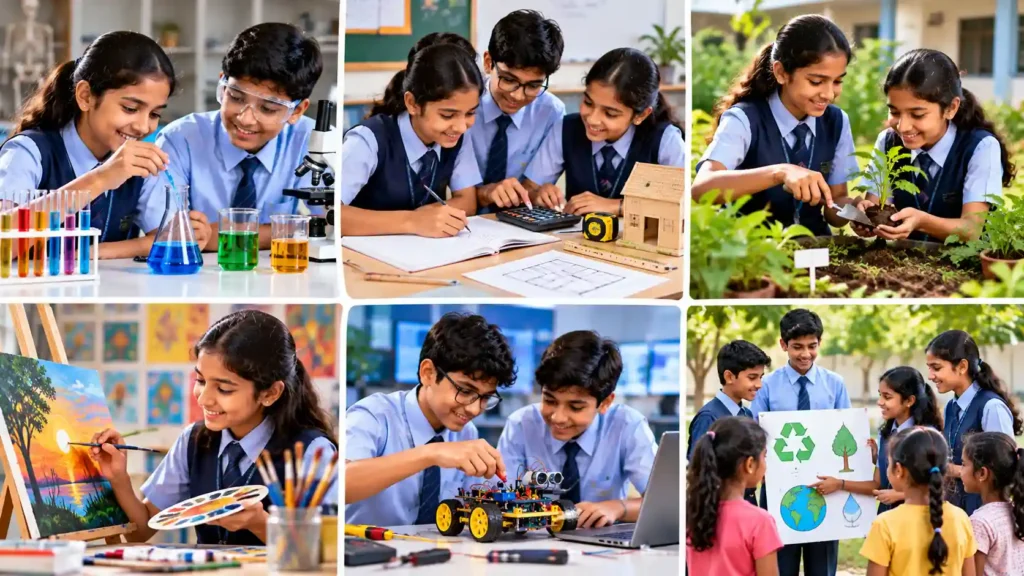
Skill-based education in schools becomes easier to understand when we look at activities students can relate to.
Here are some examples of how practical learning can be connected with ordinary school subjects.
Science: Learning Through Experiments
Students studying scientific concepts can conduct suitable experiments, make observations and record their findings.
For example, they might observe how different conditions affect seed germination or investigate which materials absorb water most effectively.
The teacher can help students connect their observations with scientific principles.
Mathematics: Solving Practical Problems
Mathematics can be applied to budgeting, measuring, planning and interpreting data.
Students could calculate the approximate cost of materials for a classroom project, compare prices or measure an area before preparing a layout.
Such activities show students why mathematical skills are useful in everyday situations.
Environmental Education: Understanding Sustainability
Students can explore waste segregation, water conservation, plant care and local environmental challenges.
A school activity could involve observing how much paper is discarded in a classroom and suggesting ways to reduce unnecessary waste.
The goal is to connect environmental knowledge with practical responsibility.
Art and Design: Turning Ideas Into Products
Students can explore creativity through drawing, craft, poster design, model-making and other age-appropriate activities.
They may plan a design, choose materials, create a product and improve it after reviewing the result.
This can develop visual communication, planning and creative problem-solving.
Technology: Exploring Digital Skills
Depending on their age and the school’s resources, students can learn about digital tools, basic coding, presentations and responsible technology use.
The focus should be on understanding how technology can help solve problems rather than simply using devices for entertainment.
Community Projects: Learning Through Service
Students can investigate a local issue, collect information and propose a practical response.
For example, a class might prepare an awareness campaign about cleanliness, water conservation or road safety.
Activities should be appropriate for the students’ age and conducted with suitable teacher supervision.
Does Experiential Learning Replace Traditional Classroom Teaching?
No. Experiential learning works best when it complements classroom instruction rather than replacing it.
Textbooks, explanations, reading, written practice and examinations continue to play important roles in education.
A practical activity alone may not provide all the information students need to understand a complex concept. Similarly, theoretical knowledge may remain abstract if students never have an opportunity to apply it.
An effective learning process can combine several stages:
- Understand: Learn the basic concept through teaching, reading or discussion.
- Explore: Observe an example or investigate a question.
- Practise: Complete an activity, experiment or project.
- Reflect: Discuss what worked, what did not and why.
- Apply: Use the learning in a new situation.
This combination helps students connect knowledge with experience.
The CBSE experiential learning manual also discusses making learning active, engaging and connected to real life. You can read the official CBSE Experiential Learning Manual for further guidance.
The Role of Teachers in Experiential Learning
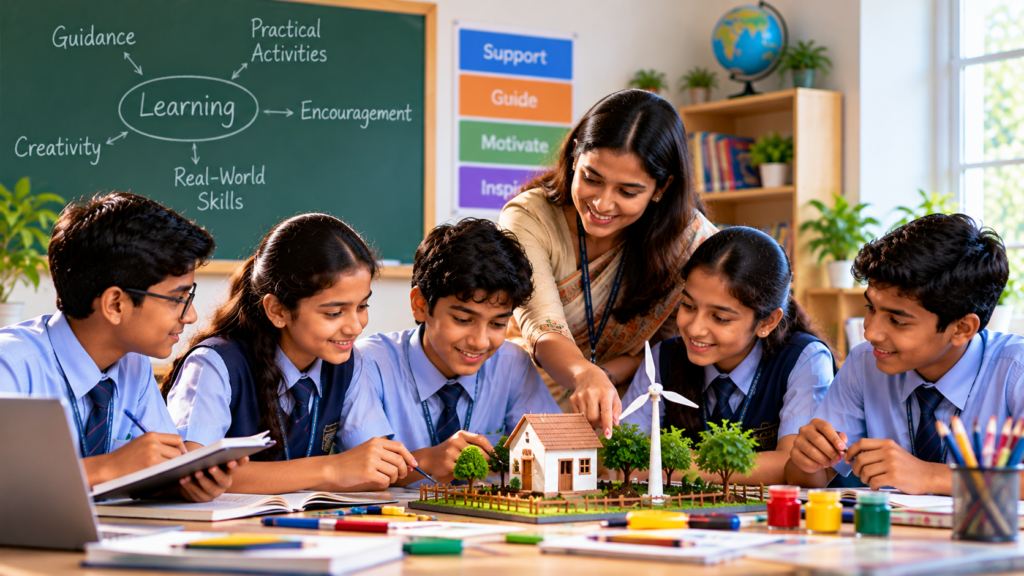
Teachers remain central to effective experiential learning.
Their role is not simply to assign an activity and expect students to learn everything independently. They help students understand the purpose of the task, provide suitable resources, encourage questions and connect practical observations with academic concepts.
Teachers can support students by:
- Explaining the learning objectives before an activity
- Choosing projects appropriate to students’ ages and abilities
- Providing clear instructions and safety guidance
- Encouraging students to ask questions
- Allowing students to explore different solutions
- Giving constructive feedback
- Helping students reflect on their experiences
- Assessing both the learning process and the final outcome
Not every project requires expensive equipment or advanced technology. Many useful activities can be conducted with simple materials, thoughtful planning and teacher guidance.
The quality of the learning experience matters more than how impressive the activity looks.
How Parents Can Encourage Practical Learning at Home
Parents can support skill development without turning every activity into a formal lesson.
Everyday situations provide opportunities for children to practise useful skills.
Encourage curiosity
When a child asks how something works, encourage observation and discussion instead of immediately providing the answer.
Involve children in age-appropriate tasks
Children can help measure ingredients, organise books, care for plants, plan a simple budget or prepare a shopping list.
These tasks can encourage responsibility and practical thinking.
Let children solve small problems
Rather than completing every task for them, give children opportunities to think through manageable challenges.
Offer guidance when necessary and recognise the effort they make.
Encourage projects and hobbies
Drawing, gardening, reading, building models, simple crafts and supervised science activities can help children explore their interests.
Discuss what they have learned
After an activity, ask questions such as:
- What did you learn?
- What was difficult?
- What would you do differently next time?
- Where could you use this skill again?
Reflection helps children connect an experience with a broader understanding.
How Schools Can Make Experiential Learning Effective
Practical learning does not need to be limited to occasional events or special activity days.
Schools can incorporate suitable experiences into regular teaching by connecting activities with curriculum objectives.
For example, teachers can use small projects to introduce a concept, reinforce a lesson or assess whether students understand how to apply their knowledge.
Schools can also encourage interdisciplinary activities that bring together different subjects.
A school garden project, for instance, might involve science through plant growth, mathematics through measurement, language through written observations and art through garden design.
To make such activities effective, schools should ensure that projects are age-appropriate, inclusive and well supervised.
Students should also have opportunities to explain their reasoning and reflect on what they learned, rather than being assessed only on the final product.
How Skill Education Helps Prepare Students for the Future
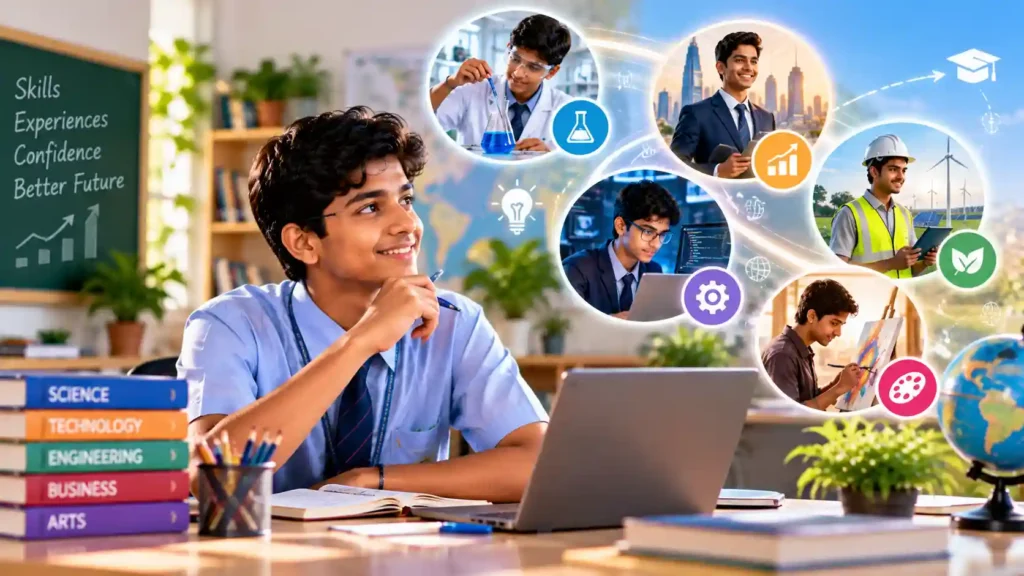
The future will continue to bring changes in technology, work and society. Students will benefit from more than academic information alone.
Practical learning can contribute to the development of skills that are useful across different situations, including:
- Critical thinking
- Communication
- Collaboration
- Creativity
- Problem-solving
- Adaptability
- Planning and organisation
- Responsible decision-making
These skills do not guarantee success on their own, but they can help students approach unfamiliar situations with greater confidence.
Skill education can also introduce students to different forms of work and help them discover interests they may not encounter through textbooks alone.
The aim at school level is not to force children to choose a career early. It is to help them explore, learn and develop a broad foundation of abilities.
What Parents Should Know About CBSE Skill Education in 2026–27
Parents looking for information about the current CBSE approach should rely on official curriculum documents rather than social media summaries alone.
For the 2026–27 session, CBSE lists Kaushal Bodh as mandatory Skill Education for Classes VI–VIII. The curriculum framework describes project-based activities connected with life forms, machines and materials, and human services.
The exact implementation and activities should be understood through the relevant CBSE materials and communication from the school.
Parents can ask their child’s school questions such as:
- What practical activities are planned for the class?
- How will projects connect with classroom subjects?
- What materials will students need?
- How will students’ work and progress be assessed?
- How can parents support learning at home?
These conversations can help families understand the purpose of skill education and support children’s learning more effectively.
Learning at Krishnanand Memorial Academy
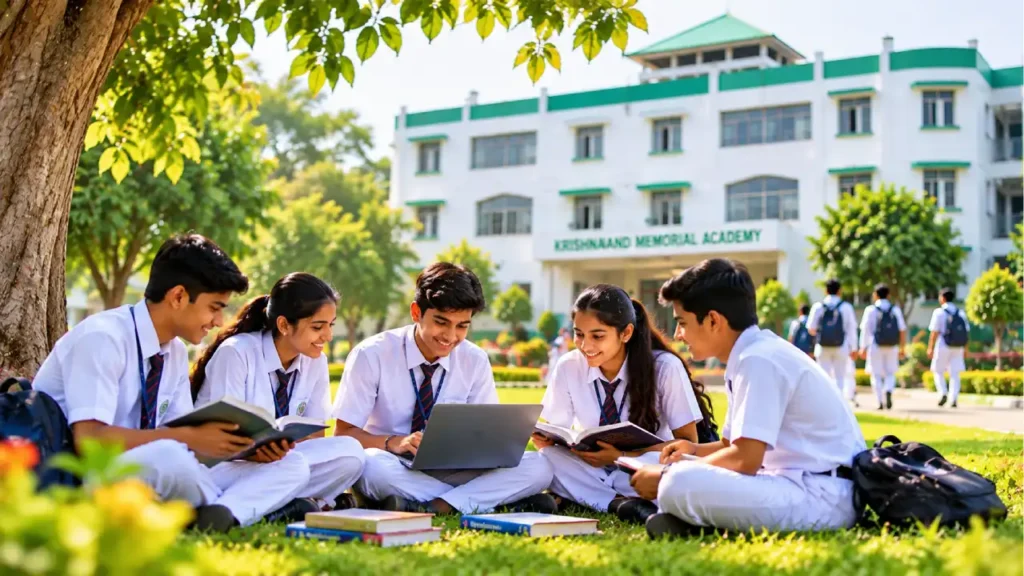
At Krishnanand Memorial Academy, parents can explore the school’s website to learn more about its educational environment, academic information and school updates.
Visit the Krishnanand Memorial Academy website to explore the available information about the school.
Families interested in learning more about admission can also visit the Admission Enquiry page to find the school’s enquiry options.
When choosing a school, parents may wish to ask about classroom teaching, practical activities, student participation, facilities and opportunities for children to develop skills alongside academic knowledge.
The most suitable learning environment is one that helps students build a strong academic foundation while encouraging curiosity, responsibility and continuous improvement.
Conclusion: Why Experiential Learning Matters
Education should help students understand ideas, apply knowledge and develop the ability to approach new challenges thoughtfully.
Experiential learning in schools supports this goal by connecting classroom concepts with practical experiences. Through projects, experiments, observation and reflection, students can explore how their learning applies to everyday life.
CBSE’s Skill Education framework for 2026–27, including Kaushal Bodh for Classes VI–VIII, reflects the importance of structured, project-based learning and exposure to different forms of work.
At the same time, practical activities are most effective when they are supported by good teaching, clear learning objectives and opportunities for reflection.
For parents, teachers and schools, the opportunity is to help children become not just students who remember information, but learners who can use their knowledge with confidence and responsibility.
The ultimate goal of skill-based education in schools is not to replace academic learning. It is to make that learning more useful, meaningful and connected to the world students live in.
When children have opportunities to learn by doing, they can begin to understand not only what they know, but also how to use it.
Discover more about the school’s educational approach and opportunities by visiting Krishnanand Memorial Academy online.