Introduction: A New Era of Education in India
Education is not just about reading textbooks, memorising answers and scoring marks in examinations. True education is about developing knowledge, creativity, confidence, critical thinking and the ability to solve real-world problems.
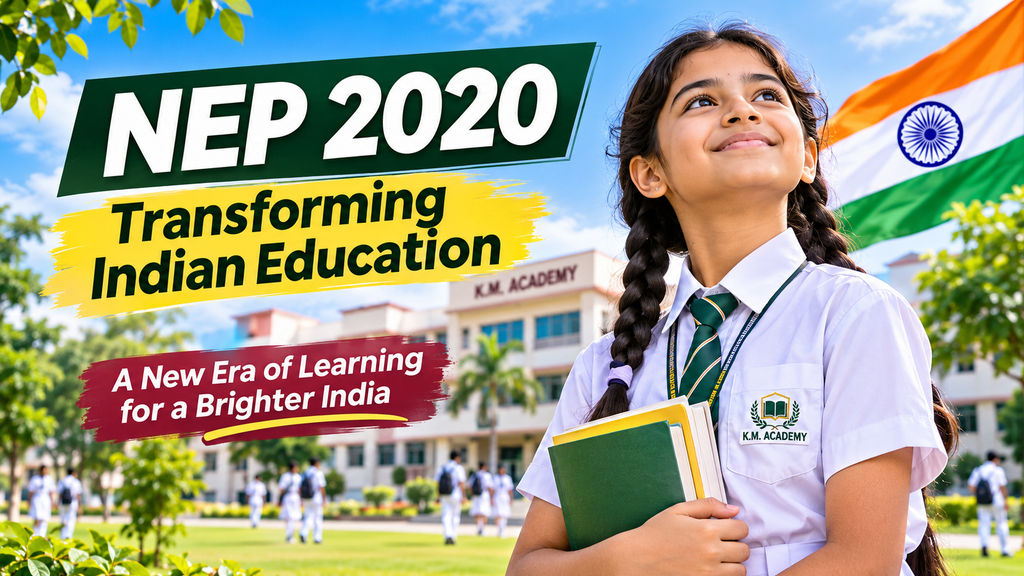
With this vision, the Government of India introduced the National Education Policy (NEP) 2020 on 29 July 2020, bringing a new direction to the Indian education system.
NEP 2020 aims to transform traditional classroom learning into a more flexible, practical, skill-oriented and student-centred educational experience.
The central idea is simple: Every child is unique, every child has potential, and education should help every child discover that potential.
Let’s understand how NEP 2020 is transforming Indian education and preparing students for the challenges of the 21st century.
- What is NEP 2020?
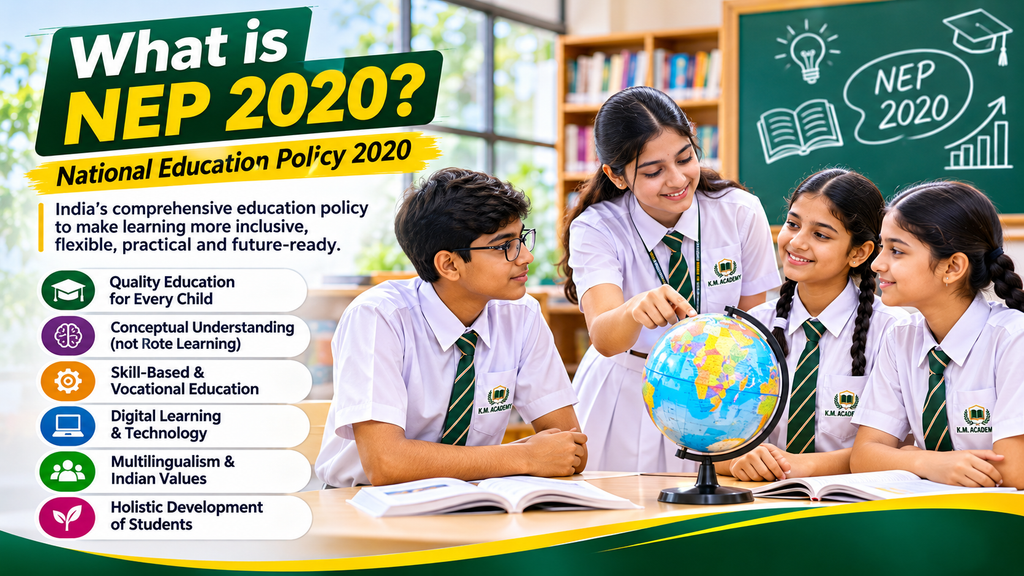
The National Education Policy 2020 is India’s comprehensive education policy designed to make learning more inclusive, multidisciplinary, practical and future-ready.
It focuses on:
- Quality education for every child.
- Conceptual understanding instead of rote memorisation.
- Creativity and critical thinking.
- Skill-based and vocational education.
- Digital learning and educational technology.
- Multilingualism and Indian values.
- Holistic development of students.
The policy aims to create learners who are not only academically strong but also socially responsible, innovative and confident.
- Understanding the New 5+3+3+4 Education Structure
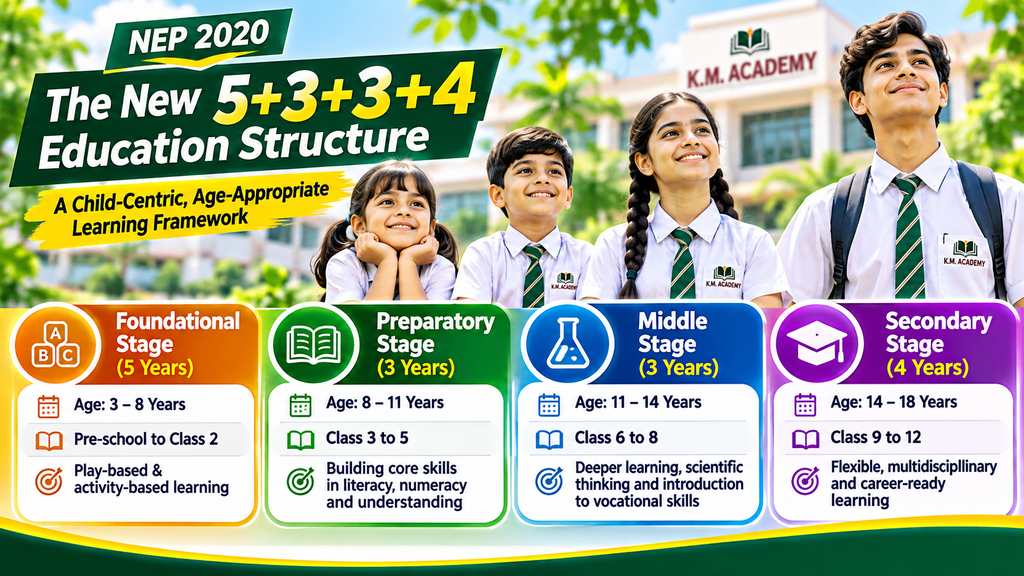
One of the most significant changes introduced by NEP 2020 is the new 5+3+3+4 curricular structure, designed according to children’s age groups and developmental needs.
Foundational Stage – 5 Years
Age Group: 3–8 Years
This stage includes three years of preschool or Anganwadi education and Classes 1–2.
Learning focuses on:
- Play-based activities.
- Basic language development.
- Early mathematical understanding.
- Stories, games and creative activities.
- Social and emotional development.
Preparatory Stage – 3 Years
Age Group: 8–11 Years | Classes 3–5
Students gradually move towards structured classroom learning through:
- Interactive teaching.
- Reading and writing.
- Mathematics and environmental studies.
- Art, sports and activities.
- Experiential learning.
Middle Stage – 3 Years
Age Group: 11–14 Years | Classes 6–8
This stage introduces more subject-oriented learning.
Students develop:
- Scientific thinking.
- Mathematical reasoning.
- Logical and analytical skills.
- Introduction to vocational education.
- Computational Thinking and digital awareness.
Secondary Stage – 4 Years
Age Group: 14–18 Years | Classes 9–12
The focus shifts towards deeper conceptual understanding, flexibility and career preparation.
Students are encouraged to develop:
- Critical thinking.
- Research and analytical abilities.
- Career awareness.
- Independent learning.
- Subject understanding and practical knowledge.
- From Rote Learning to Concept-Based Education
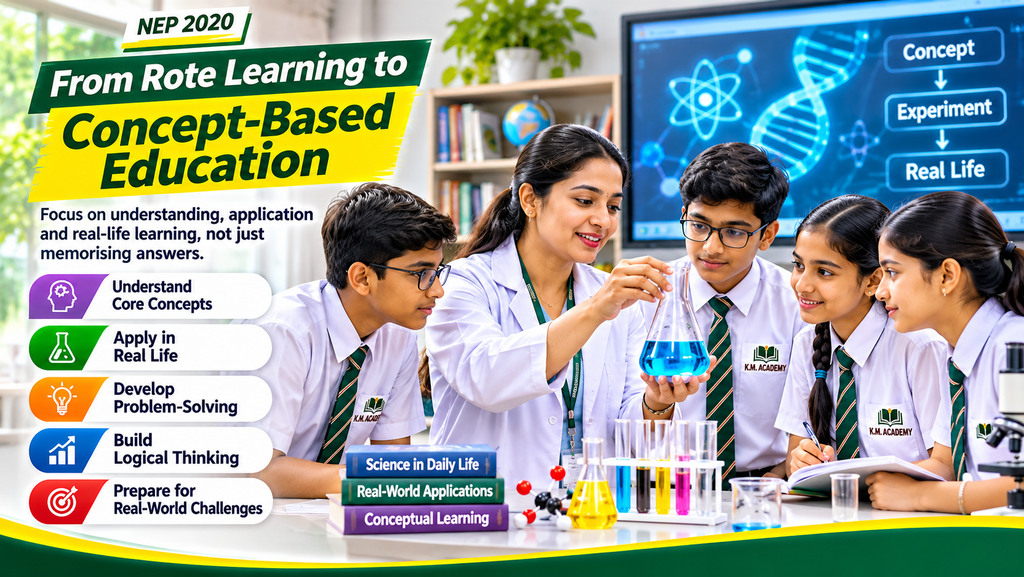
For many years, traditional education has placed considerable emphasis on memorising information.
NEP 2020 encourages a different approach: students should understand concepts rather than simply memorise answers.
For example, instead of only memorising scientific formulas, students should understand how scientific principles work in everyday life.
Similarly, mathematics should develop logical thinking, while social science should help students understand society, history and the world around them.
The goal is not just to prepare students for examinations but to prepare them for life.
- Skill-Based Learning: Preparing Students for Real Life
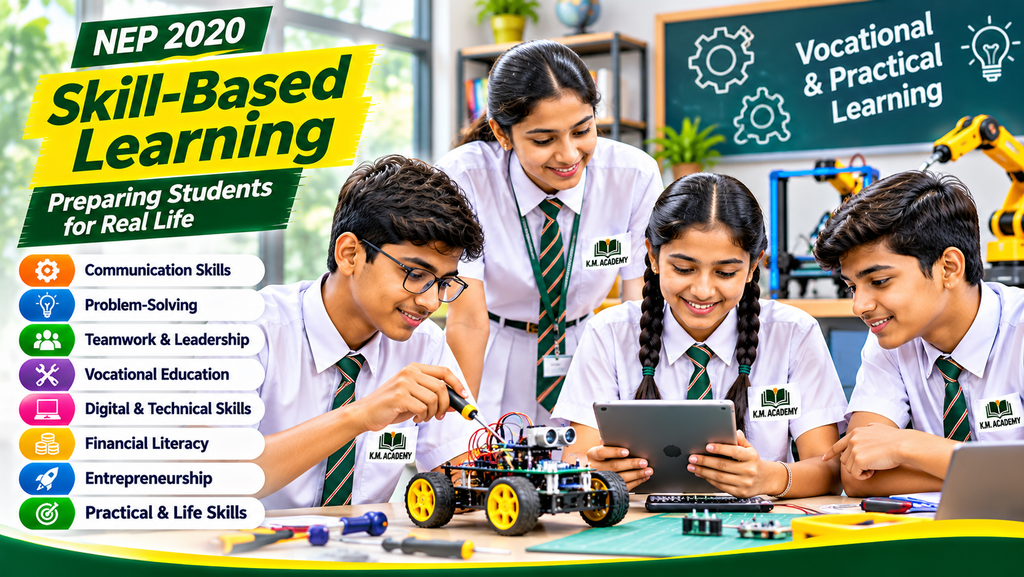
The future belongs to individuals who can apply their knowledge practically.
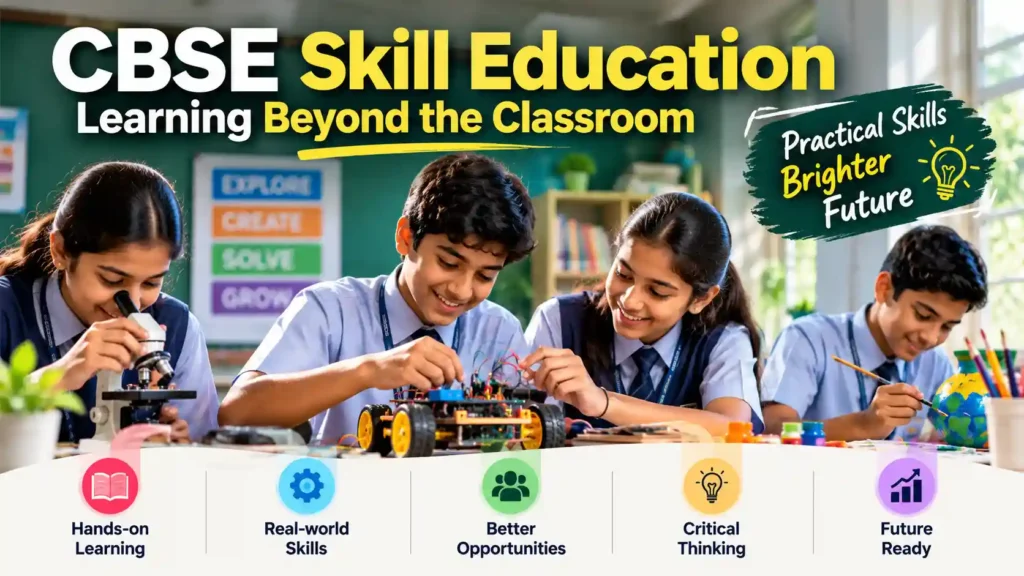
NEP 2020 promotes vocational education and practical exposure, including opportunities for internships and skill development.
Important skills include:
- Communication skills.
- Problem-solving.
- Teamwork and leadership.
- Financial literacy.
- Entrepreneurship.
- Creative thinking.
- Digital literacy.
- Practical and technical skills.
From Class 6 onwards, the policy envisages exposure to vocational education, including practical learning opportunities.
These skills can help students become more independent, confident and career-ready.
- Artificial Intelligence (AI) and Technology in Education
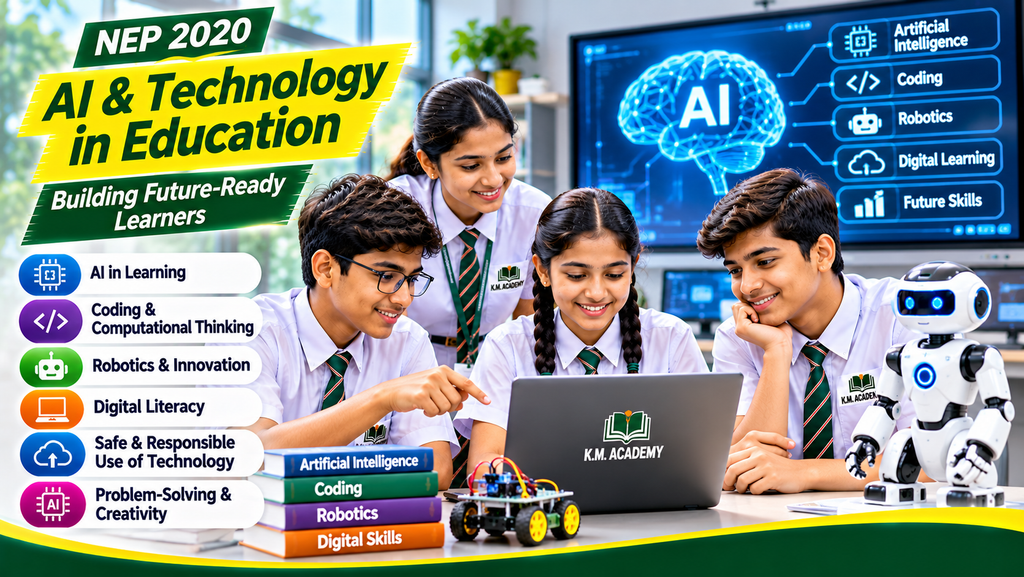
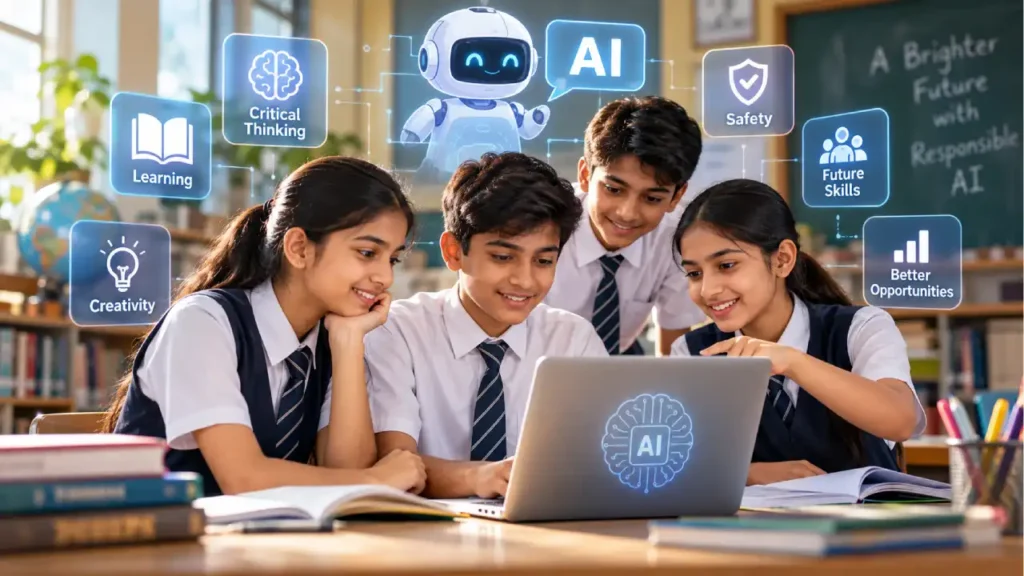
Artificial Intelligence is changing the world, and education cannot remain untouched by this transformation.
Today’s students are growing up in a world where AI, robotics, automation, digital platforms and advanced technologies are becoming increasingly important.
Modern education must help students understand and use technology responsibly.
Some important areas of future-oriented learning include:
- Artificial Intelligence (AI).
- Computational Thinking (CT).
- Coding and logical reasoning.
- Robotics and automation.
- Digital safety and cyber awareness.
- Technology-assisted learning.
These areas can help students become creators of technology rather than just consumers of it.
CBSE’s growing focus on Computational Thinking and Artificial Intelligence reflects the increasing importance of preparing school students for a technology-driven future.
- Holistic Development: Beyond Academics
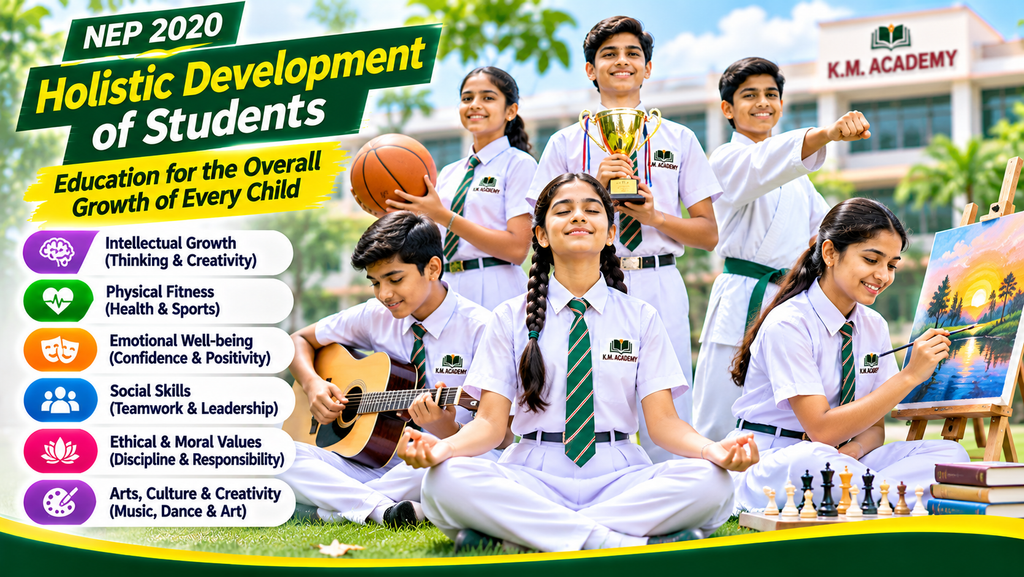
A student’s development should never be measured only through examination marks.
NEP 2020 promotes holistic education, recognising the importance of physical, emotional, social, intellectual and creative development.
Schools play an important role in providing opportunities for:
- Sports and physical fitness.
- Music and dance.
- Art and cultural activities.
- Debate and public speaking.
- Science exhibitions.
- Creative projects.
- Leadership and teamwork.
These activities help students discover their interests, improve confidence and develop essential life skills.
- The Importance of Teachers in NEP 2020
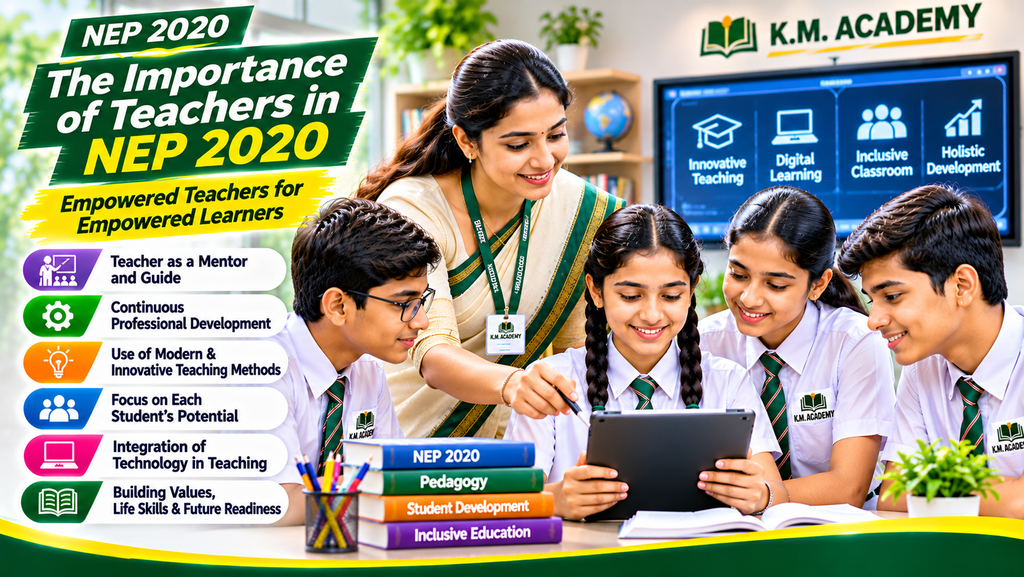
Teachers are the foundation of every successful education system.
Under the vision of NEP 2020, teachers are encouraged to move beyond traditional teaching methods and become facilitators, mentors and guides.
Modern teaching approaches include:
- Activity-based learning.
- Project-based learning.
- Interactive classroom sessions.
- Digital teaching tools.
- Experiential education.
- Continuous professional development.
A supportive teacher can inspire curiosity, encourage independent thinking and help students reach their full potential.
- What Does NEP 2020 Mean for Parents?
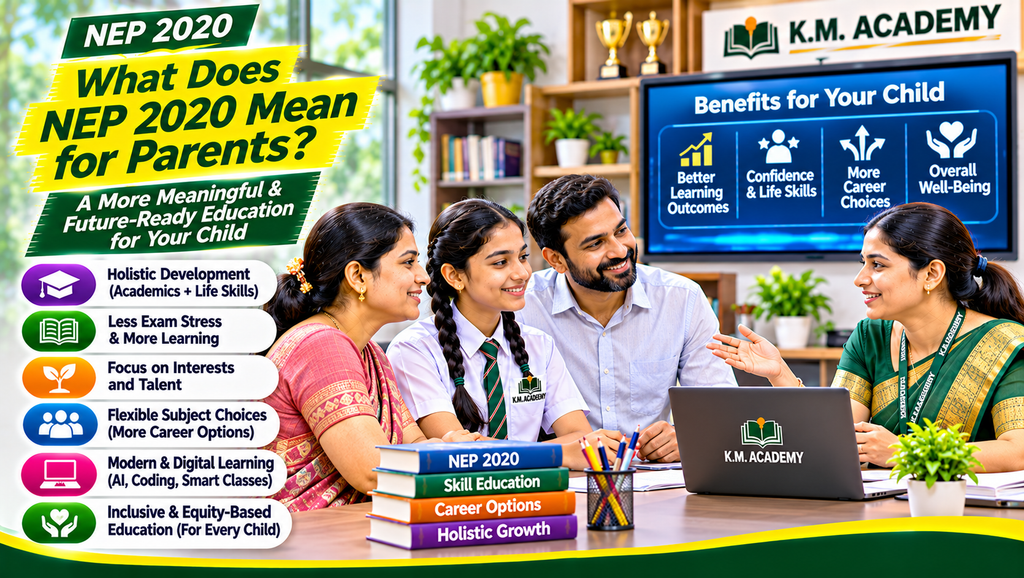
Parents are important partners in a child’s educational journey.
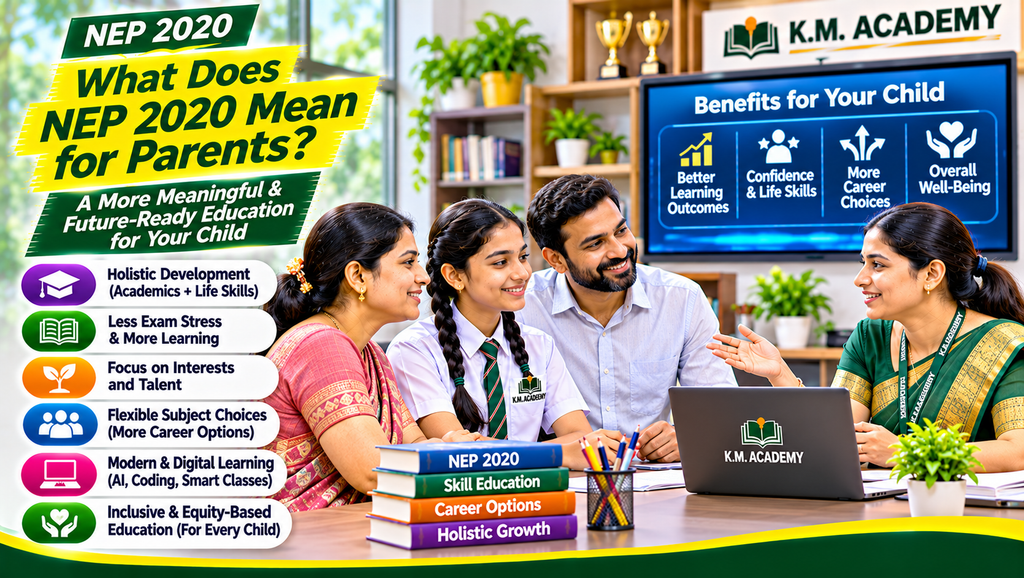
NEP 2020 encourages a learning environment where schools and families work together for children’s overall development.
Parents can support this vision by:
- Encouraging children to ask questions.
- Promoting reading habits.
- Supporting sports and creative activities.
- Avoiding unnecessary academic pressure.
- Encouraging practical learning.
- Developing responsible digital habits.
- Appreciating effort, improvement and creativity.
Remember, every child learns differently. Comparing children with one another cannot replace understanding their individual strengths.
- How CBSE Schools Can Contribute to the Vision of NEP 2020
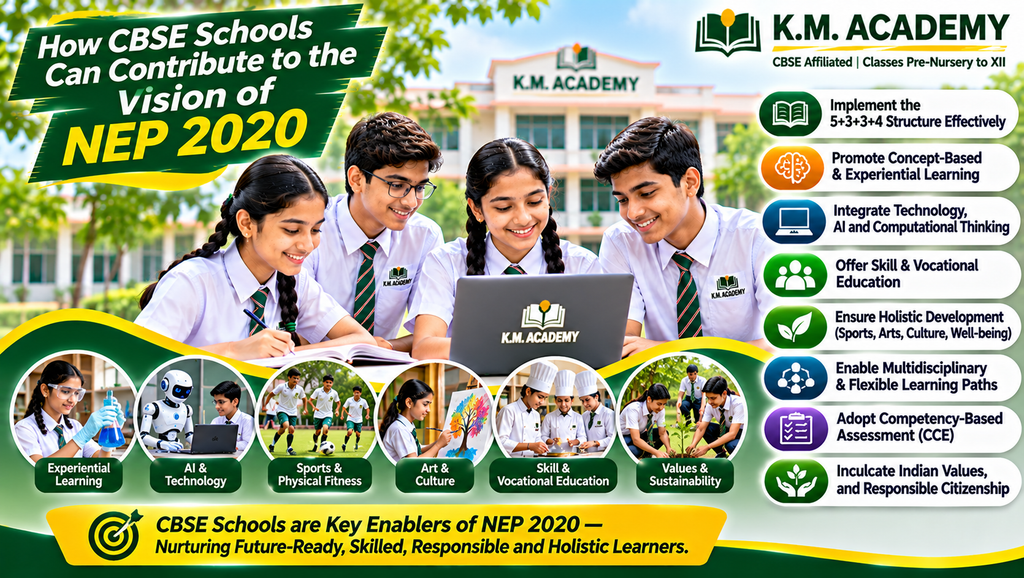
CBSE-affiliated schools have an important role in promoting modern educational practices and supporting the objectives of NEP 2020.
The focus should be on creating an educational environment where students receive opportunities to learn, explore, experiment and grow.
At Krishnanand Memorial Academy, Rahmatpur, Asarganj, Munger, we believe that education should prepare students not only for academic success but also for the opportunities and responsibilities of tomorrow.
Our vision is to encourage a learning culture that values knowledge, discipline, creativity, innovation and character development.
Through meaningful classroom experiences, technology-enabled learning and co-curricular opportunities, we aim to inspire students to become confident and responsible individuals.
- The Future of Indian Education
The future of education will be shaped by innovation, technology, creativity and practical knowledge.
Students of tomorrow will need more than textbook knowledge. They will need the ability to adapt, communicate, collaborate and solve problems.
NEP 2020 provides a broad framework for moving towards this vision.
Its success will depend on effective implementation, trained teachers, supportive parents, modern learning resources and active participation from educational institutions.
The transformation of education is not the responsibility of schools alone. It is a shared responsibility of teachers, parents, policymakers and society.
Conclusion: Educating Today, Empowering Tomorrow
NEP 2020 represents an important vision for the future of Indian education.
It encourages a shift from memorisation to understanding, from examination-focused learning to holistic development, and from traditional classroom practices towards practical and technology-enabled education.
A truly educated student is not simply someone who scores high marks. It is someone who can think independently, make responsible decisions, face challenges confidently and contribute positively to society.
At Krishnanand Memorial Academy, we believe that every child deserves an opportunity to learn, explore, innovate and succeed.
Together, let us build a generation that is knowledgeable, skilled, confident and ready for the future.
Because the future of India begins in today’s classrooms.
Frequently Asked Questions (FAQs)
Q1. What is the full form of NEP 2020?
NEP stands for National Education Policy. It was introduced on 29 July 2020.
Q2. What is the 5+3+3+4 structure in NEP 2020?
It is the new curricular and pedagogical structure divided into Foundational, Preparatory, Middle and Secondary stages, covering ages 3–18.
Q3. Does NEP 2020 focus on practical learning?
Yes. It encourages experiential, competency-based, activity-based and skill-oriented learning.
Q4. What is the role of Artificial Intelligence in modern education?
AI and related technologies can help students develop computational thinking, digital literacy, problem-solving and an understanding of emerging technologies.
Q5. Is NEP 2020 only about academic education?
No. It promotes holistic development, including sports, arts, vocational skills, creativity, values and emotional development.
Q6. How can parents support NEP 2020?
Parents can encourage curiosity, independent thinking, reading, practical activities and a healthy balance between academics and extracurricular activities.
About Krishnanand Memorial Academy
Krishnanand Memorial Academy (K.M. Academy) is a CBSE-affiliated Senior Secondary School located at Rahmatpur, Asarganj, Munger, Bihar.
Our institution aims to promote quality education, academic excellence, innovation and the all-round development of students.
Website: https://www.kmacademyasarganj.in
Email: asarganjkma@gmail.com
Disclaimer: This article is intended for general educational awareness. NEP 2020 is a policy framework; its provisions are implemented through applicable government, NCERT and CBSE guidelines.